

Starts before they walk in
A characterised welcome, the change of light and the first thing guests are asked to do are what separate a dressed room from an experience people actually step into.


Events
An immersive event surrounds guests with sets, light, sound and technology so they feel they are inside another place or story, rather than just watching it.
Set design, virtual reality and sensory experiences that turn a room into somewhere else for a few hours.
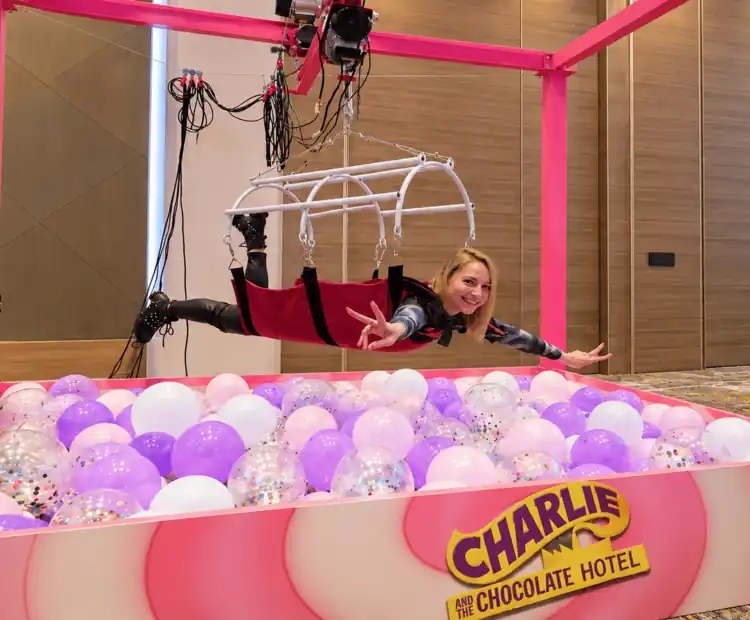
We design and build complete immersive events: themed set design, virtual reality, sensory experiences and games that put guests inside the story instead of sitting them down to watch it.
The difference between a themed event and an immersive one is where it starts. A themed event puts up decoration and hopes the atmosphere does the rest. An immersive one begins at the door: whoever greets you is in character, light and sound change as you enter, there is something guests have to do to move forward, and each zone tells a different part. That continuity is what makes people believe it and put their phones away.
To achieve it we work four layers at once: set, lighting, activity and characterised staff. The set defines the place, the light defines the hour and the weather, the activity gives a reason to move through the space, and the staff hold the tone. Drop any one of the four and it shows immediately: a perfectly dressed room with waiters in ordinary uniform stops being immersive within five minutes.
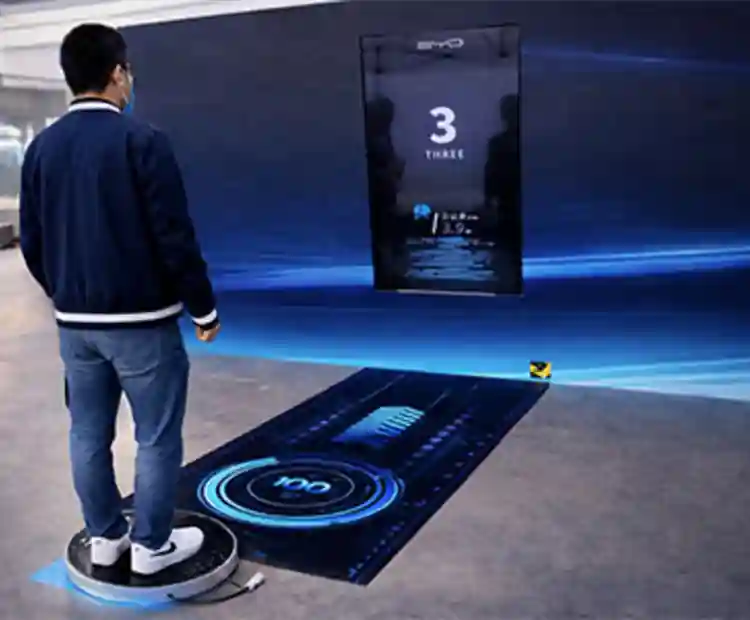
The specific tools vary. Some events are solved with virtual reality, where each guest enters the world individually; others with physical sets and actors; and others with sensory experiences, haze, scent, surround sound, reactive light, that work without explicit narrative. What decides which to use is not fashion but how many people there are, how long they stay and what you want them to remember.
It pays to decide early how much participation guests will be asked for. Some audiences welcome being drawn into the story; others are uncomfortable when an actor addresses them in character. At corporate events this is especially noticeable: a convention with senior management accepts atmosphere and optional interaction, but forcing anyone to participate rarely works. We design to an agreed intensity level, with clear exits for anyone who would rather just watch.
A characterised welcome, the change of light and the first thing guests are asked to do are what separate a dressed room from an experience people actually step into.
An immersive event needs guests to travel through the space. We distribute activities and discoveries across zones so nobody parks at the bar all night.
Set, lighting, activity and characterised staff are designed together. When one of the four falls out of tone, the illusion breaks within the first few minutes.
Theme, tone and intensity, matched to the real audience: a convention is not a private party.
What happens on entry, which zones exist, what happens in each and how the experience closes.
Structures, props, lighting and digital content, tested before the day of the event.
Full build, actors and technicians during the event, and takedown that leaves the venue untouched.
The venue constrains an immersive event more than the budget does. We need to know three things before proposing anything: whether it can be blacked out, how much clear height there is, and what can be hung or fixed. In a room that cannot be darkened, lighting loses half its effect and has to be compensated with more physical set, which raises cost without improving the result.
The condition it has to be returned in matters too. Hotels and rental venues often prohibit drilling or adhesives on certain surfaces, so we work with free-standing structures and reversible fixing systems. We confirm this with the venue before the build so there are no arguments at takedown.
Less than people assume. We have built complete experiences in two-hundred-square-metre rooms. What matters most is not floor area but clear height and whether the room can be blacked out, because lighting does half the work.
Yes, and it works particularly well at launches. The narrative is built around the product and digital content is produced to order. It needs more production lead time than a standard event.
Twenty to thirty per hour per station, depending on content length. For large headcounts we set up several stations in parallel with a queue managed by our staff.
Yes, when the experience calls for it. Characterised actors, in-character floor staff and extras. It is the layer that holds immersion together and the first one noticed when it is missing.
More than a conventional event. A full set with dedicated lighting usually needs six to twelve hours, depending on room size. If the space is only available on the day itself, we say so when quoting and propose a version that does fit that window.