



Fills the dead hours
Doors opening, stage changeovers and the small hours. Those are the slots where crowds scatter or leave, and the ones an entertainment zone converts into time spent on site.


Events
Festivals and large-scale events bring together thousands of people over one or more days around music, food, sport or family, with activities running throughout.
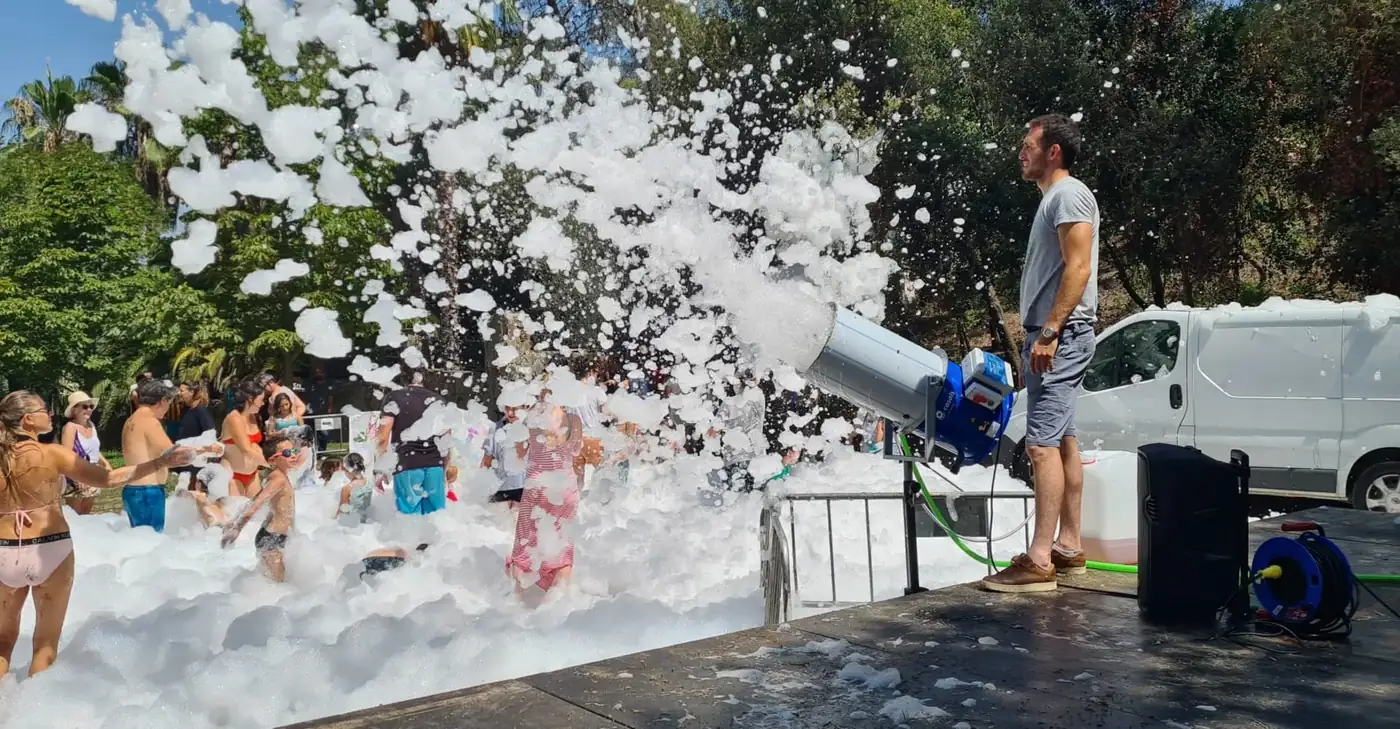
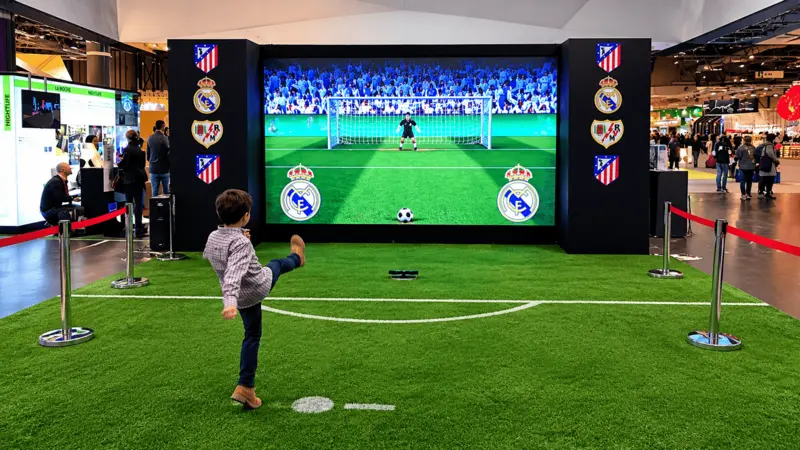
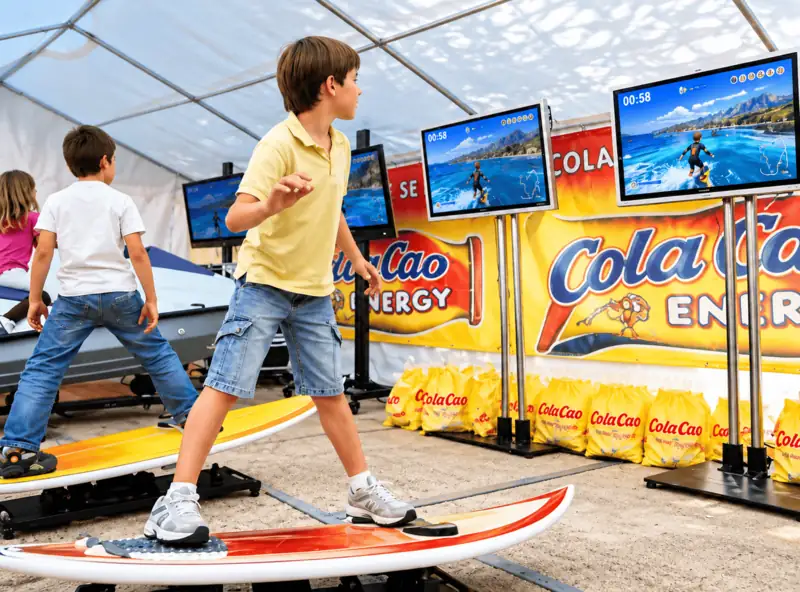
Entertainment zones, inflatables, simulators and activations that give the crowd something to do between sets.
We build complete entertainment zones for festivals, mass events and large venues: dozens of activities, structure, staff and a rotation plan designed for thousands of people across several days.
The calculation almost nobody makes when programming a festival is how many hours the crowd has nothing to do. Between doors opening and the first big act there are often four hours; between sets there are gaps of thirty or forty minutes; and there is always a share of the audience who came along with someone else rather than for the music. Those people need something, and if they do not find it inside, they leave the site and frequently do not come back.
An entertainment zone fills that gap and has a side effect production cares about: it distributes the crowd. When there is something to do at the back of the site, pressure in front of the stage drops and circulation improves. We build zones of between five and thirty activities depending on capacity, with structure, fencing, signage and our own staff at each point, plus a rotation plan so queues do not eat the afternoon.
We also handle the sponsorship side, which is where a festival recovers budget. Brands want a space people actually use, not an inflatable arch with their logo on it. A custom game, a fan zone with simulators or an activation giving away product performs far better, generates photos and lets the festival sell a space with real value rather than a plain advertising surface.
Something festivals taught us the hard way: equipment in an entertainment zone has to survive use unlike anything else. Three days straight, twelve hours a day, with a crowd that has been drinking and does not treat the equipment gently. So we carry spares for everything that wears, a maintenance technician on large builds, and clear criteria for when a unit is withdrawn. It is the difference between a zone still working on Sunday and one gradually losing activities.
Doors opening, stage changeovers and the small hours. Those are the slots where crowds scatter or leave, and the ones an entertainment zone converts into time spent on site.
Putting activity at the back distributes people, lowers pressure in front of the stage and improves general circulation, which production and security both appreciate.
An active space with a branded game is worth far more than static signage. It lets the festival raise sponsorship value and the brand walk away with participations and content.
Site plan, available surface, estimated daily capacity, opening hours and heavy vehicle access.
Which activities, how many units, how they are laid out, how many people they move per hour and how much crew each shift needs.
Insurance, equipment certificates, technical sheets and whatever the council or festival management requires.
Build before doors, operation across every day with staff at each point, and takedown at close.
The most common mistake when designing an entertainment zone is thinking in number of activities rather than capacity per hour. A spectacular activity serving only fifteen people an hour creates a disproportionate queue and leaves a bad impression. We prefer to combine two or three eye-catching pieces with several high-rotation ones, so there is always something available immediately and the queueing spreads out.
With the capacity and the festival's opening hours we can calculate this before building anything. We tell you how many participations per hour the proposed zone supports and how many people will be left waiting at peak. It is an uncomfortable number sometimes, but it lets you decide with data whether to add units or whether the design holds as it is.
Yes, that is standard at festivals. We build before the first day opens and operate with staff shifts across the whole programme, including maintenance and equipment replacement between days.
Public liability insurance, equipment certificates, technical sheets with weights and power draw, and whatever the competent authority requires. We handle this so production does not have to chase it.
It depends on capacity. As a reference, for a festival of five thousand people a day we work with zones of between three hundred and eight hundred square metres. Send the site plan and we will tell you what fits and how to lay it out.
Yes, it is professional equipment built for several days of continuous use, and we carry spares for whatever wears fastest. Our staff are at each point managing turns and safety throughout the day.
Yes, that is normal at festivals. We integrate into the general planning, respect load-in and load-out windows and coordinate with production, security and the site manager. You do not need to act as go-between for us and the other suppliers.