
Scales without losing pace
We multiply units and calculate rotations so everyone is active at once. That is what stops a hundred people becoming twenty playing and eighty watching.



Corporate Team Building
Team games are activities in which participants split into groups and play together to score points or complete tests, with no prior preparation needed.
Giant games, competitive inflatables and paired challenges for large groups where nobody can be left watching.
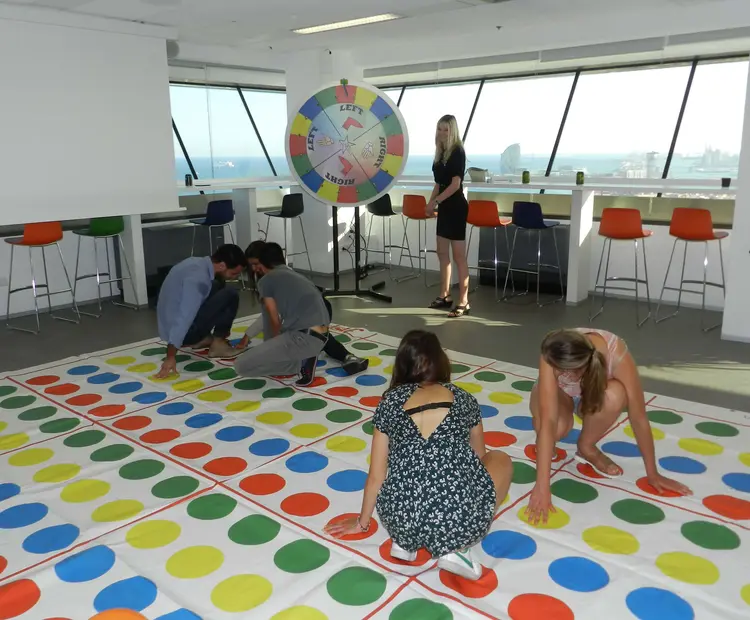
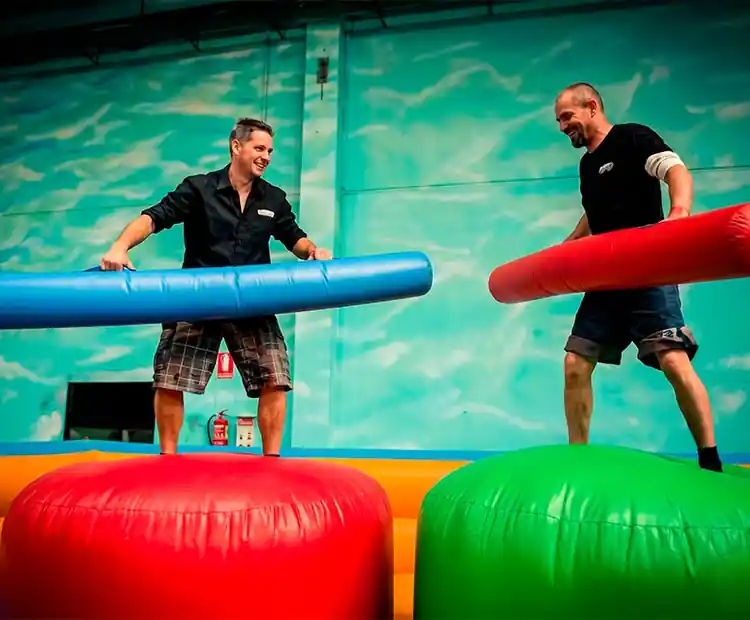
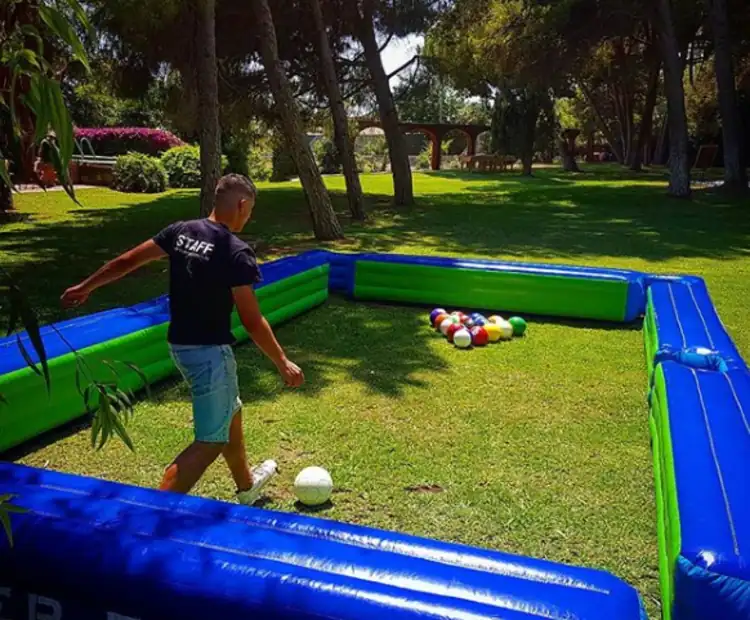
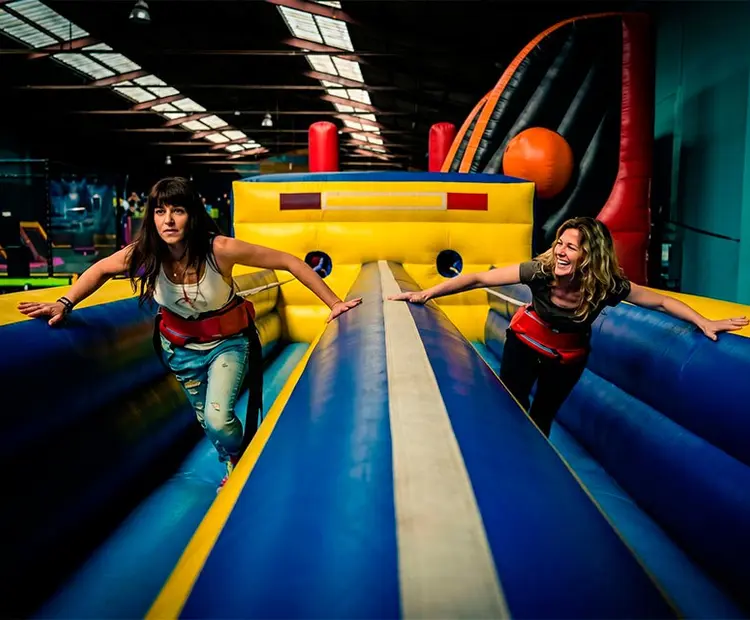
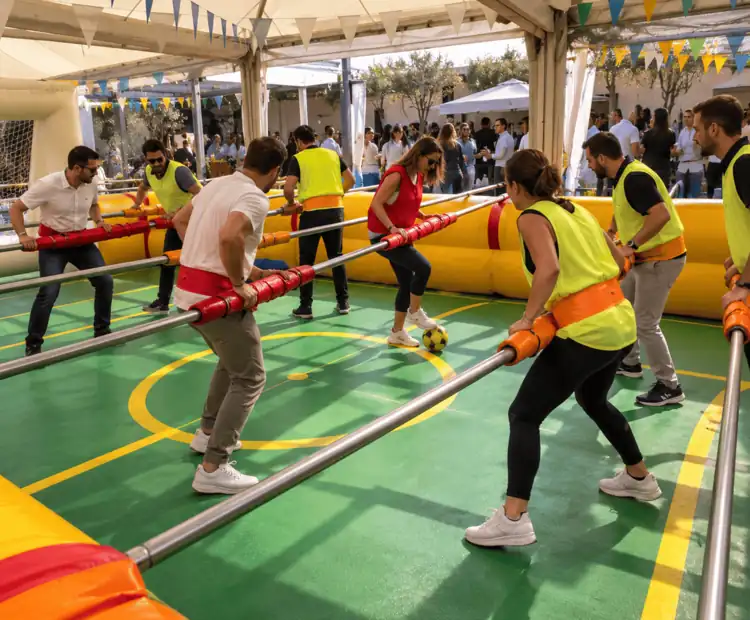
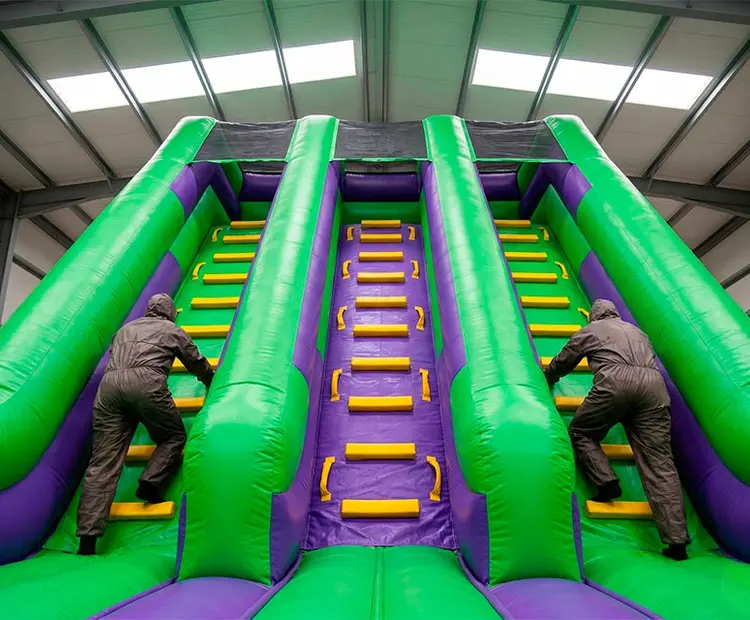
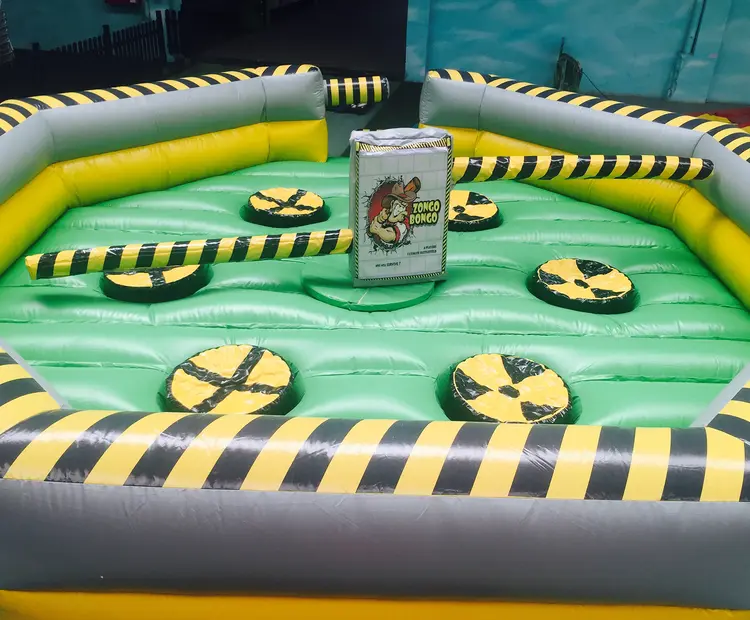
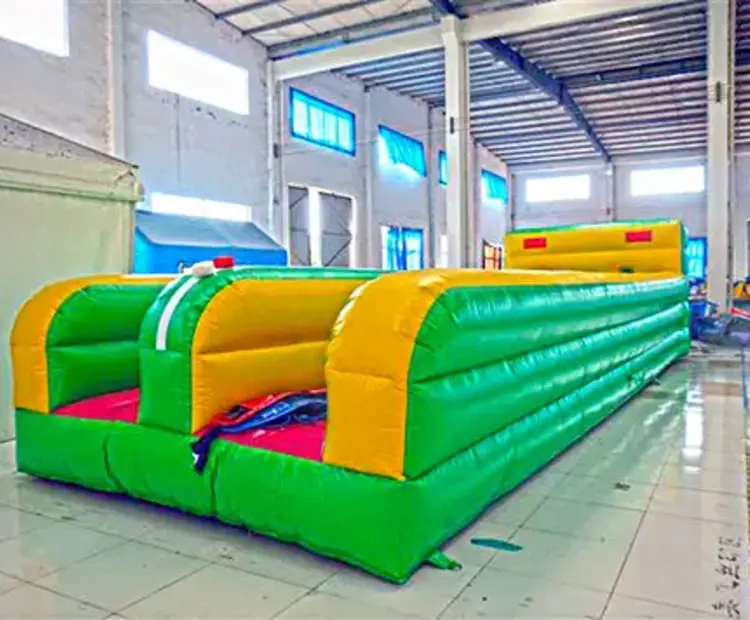
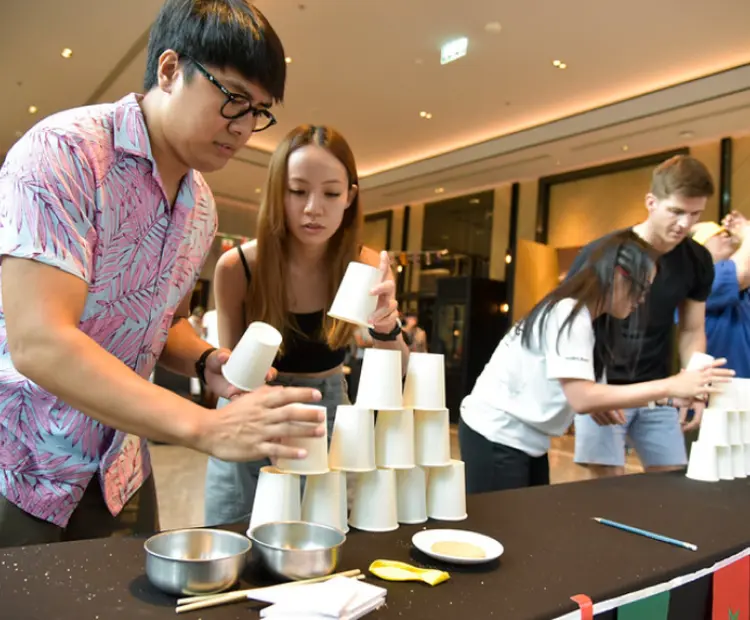
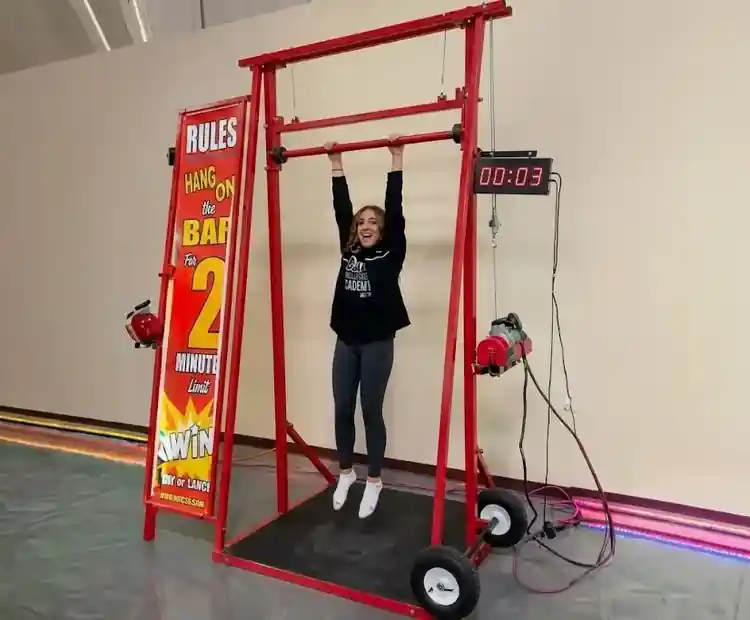
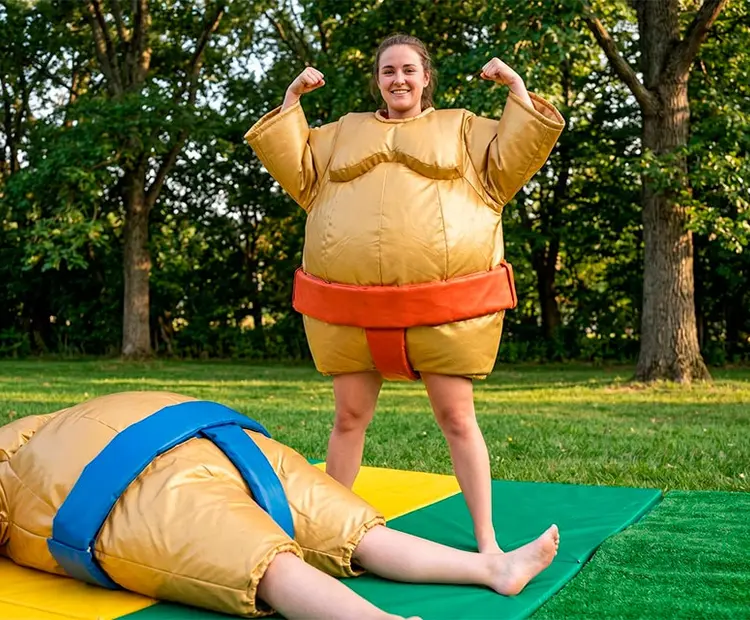
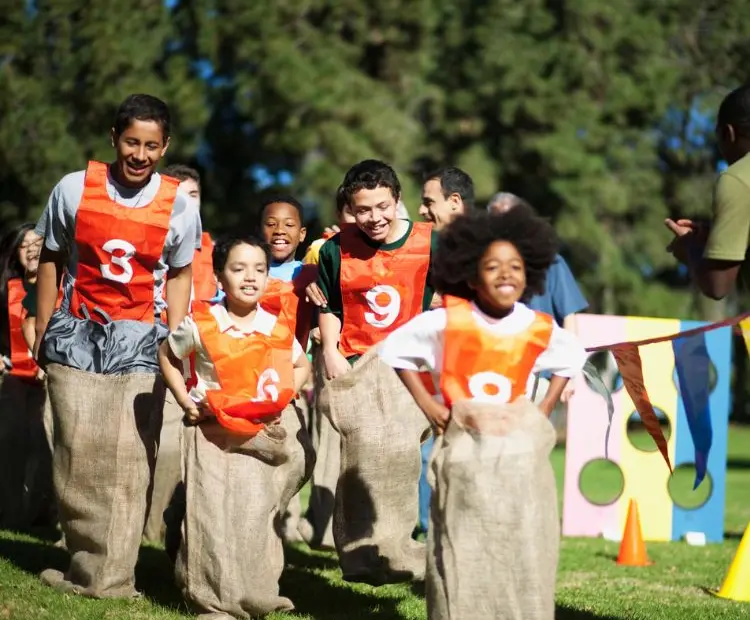
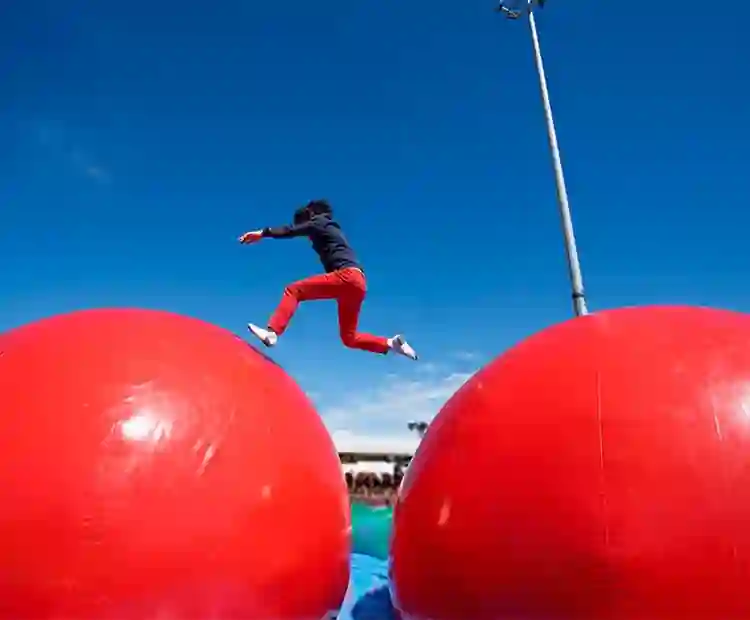
We build team game zones for large groups: giant games, competitive inflatables, human table football, sumo and collective challenges, with rotation calculated so nobody waits more than five minutes.
Once a group passes fifty people, most team building activities stop working as they are. An escape room cannot take a hundred participants, and a cooking challenge with twenty teams needs an industrial kitchen. What does scale is games: you multiply units, split the group and everyone is active at once, which is the only way an activity for a hundred people does not become twenty playing and eighty watching.
The design is basically arithmetic. With a hundred and twenty people and six games, each game has to absorb twenty people per turn, or you build twelve games, or you organise five-minute rotations. We do that calculation before proposing anything, because it is the difference between a zone that works and one that produces queues and boredom.
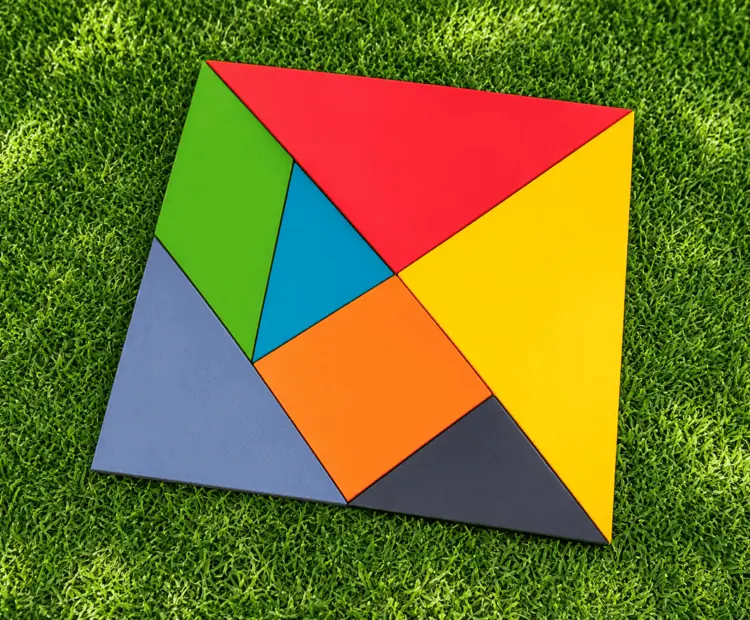
The formats that scale best are giant wooden games, competitive inflatables and paired challenges. Giant games have the advantage that playing and watching are equally entertaining: whoever waits their turn laughs just as much. Competitive inflatables concentrate a lot of energy into little time, and paired challenges double the participants in the same footprint.
We provide monitors at every point controlling turns and keeping score. With large groups, turn control decides whether the activity flows: without someone managing the order, uneven queues form, some games saturate and others sit empty, and the overall feeling is of chaos.
We multiply units and calculate rotations so everyone is active at once. That is what stops a hundred people becoming twenty playing and eighty watching.
Giant games and competitive inflatables entertain watchers as much as players, so turns are not perceived as wasted time.
One monitor per point managing order and scoring. Without it, in large groups some games saturate while others sit empty.
How many people, how much activity time and what surface area you have available.
How many games, how many units of each and what rotation is needed so nobody waits.
Placement plan, circulation between points and signage, so the group distributes itself.
Monitors at every game, turn control, scoring by team and a final classification.
Before choosing games, it pays to do one simple sum: number of participants divided by simultaneous places. With a hundred and fifty people and games taking thirty players at once, eighty per cent of the group is waiting at any moment. No activity, however good, survives that ratio.
So the first thing we calculate is simultaneous capacity, and only then do we choose specific games. Sometimes that means recommending less spectacular equipment with more places, and it is usually the right decision: in large groups, everyone playing matters more than how impressive what they play is.
Six to ten depending on time available. With two hours and well-organised rotation, six properly sized points are enough. With less time you need more so everyone gets to play everything.
Yes, with adapted equipment. Giant wooden games and paired challenges work in a sports hall or warehouse. Inflatables need clear height, so they depend on the available ceiling.
Very well. It is one of the few formats that serves a young workforce and a group with very different ages equally, because each game lets people choose their level of physical involvement.
As a guide, for a hundred people we work with around four hundred square metres. Send the site plan and we will tell you exactly what fits and how to lay it out so circulation works.
If you want, yes. Each point scores and feeds a shared board, with a classification and a closing ceremony. It can also run without competition, in free format, when the goal is purely social.