Body Paint for Events

Consulta el presupuesto con precio Body Paint for Events en Barcelona y toda España
Features of Hiring Body Painting
Procedure
Our artist completely paints one or several models with the selected design
Afterwards there are two options: one is to leave the models half finished so the work can be completed during the event and guests can watch the process of this technique, and the other option is for the artist to have the body paint finished by the start of the event, so guests can enjoy the result from the beginning.
Our artist's requirements are:
- A dressing room where they can leave all their belongings.
- A shower so the models can remove the paint once the event is over.
- Enough time before the event to start work on the pieces.
What is BodyPainting or Body Painting Art?
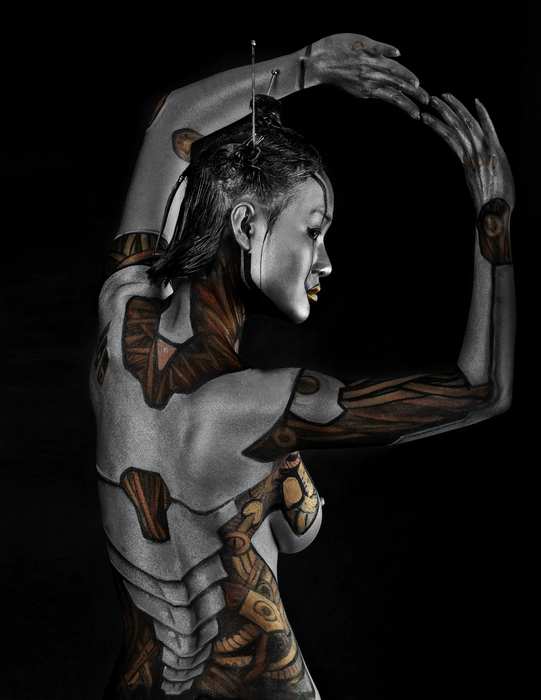
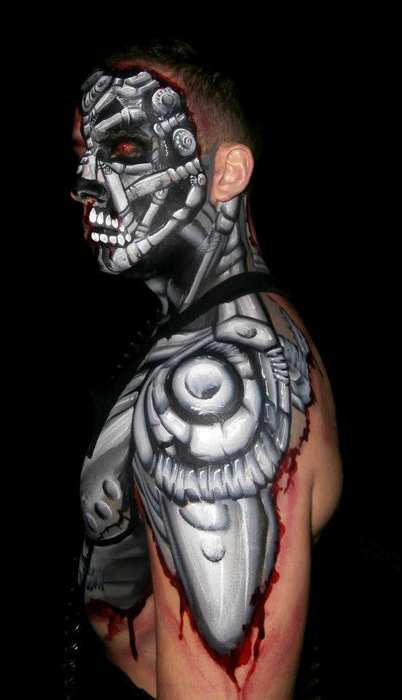
The art of body painting is a form of body art. In fact, body painting is generally associated with the art of tattooing. However, tattoo art and body painting are not synonymous. There are some substantial differences that should be mentioned. Firstly, body painting is temporary and lasts only a few hours (unlike tattoos). Secondly, there are many examples of body painting that are considered part of the fine arts. In the second half of the 20th century, many artists sought new visual forms that eventually led to the revival of the ancient practice of body painting. Therefore, despite the fact that body painting has generally been linked to the artistic practices of tribal cultures and ancient art forms, a separate space was created where a body was perceived as a canvas, with a number of important artists beginning to create works of art on the human body Of course,per se - particularly in performance art.
History of body art and body painting
Every major society has had at least one body art tradition. There are many ways of being human and many different visions of beauty. Sometimes identity marks can be disturbing to others, but they carry a very deep meaning.
There are many ways of being human. The way we decorate our bodies tells others who we are as individuals. All over the world, many people use their skin as a living canvas, representing past experiences, courage, status, beauty, protection, fertility, magic, transformations and connections with other realms.
Other symbols protect against the evil eye and evil spirits, bring fertility, heal the body, grant magical powers or support transformations and their connection with other realms. The line between reality and illusion, God and man, good and evil, Earth and beyond, life and death, the present, the past and the future, becomes blurred. Many times, the people involved in an expression of body art do not just play a role; they are becoming the role, the night, the day, the spirit, the god, the transformation, which could heal them or help others, as in cases of creating sacred pain and sacrificing one's own flesh in the name of the community.
These incredible types of expression, performance and belonging exist in two parallel worlds, one of ancient rituals and traditions that distinguish us as human, and the other of body art as a contemporary art form.
"A man without tattoos is invisible to the gods," says an Iban proverb from Borneo.
Body painting, or sometimes body paint, is a form of body art. Body art is art made with, or consisting of, the human body:
body painting, tattoos, body art performances, body piercings, scarification, branding, scalpelling, full-body tattoos.
Unlike tattooing and other forms of permanent body art, body painting is temporary, painted on human skin and lasting a day, or at most (in the case of Mehndi, "henna" or temporary tattoos, glitter tattoos) a couple of weeks. Body painting that is limited to the face is known as face painting.
Body art is also a subcategory of performance art, in which artists use or abuse their own bodies to make their particular statements.
In Western cultures there are very few rites of passage. In the tribal world, initiation is a main part of social structures.
Bella Volen has divided the visual development of Body Art and Body Painting into 3 parts.
Part 1 - Ritual body art
Every major society, past or present, has or had its own body art culture.
Rituals are a universal constant in human society. Starting with the beginning of human cultural development, rituals have continued to have a place in society, even in the modern world.
There is no shortage of research on rituals and theories about their nature.
In all cultures, rituals coincide with major decisive moments in life with regard to the individual (birth, puberty, marriage, death).
North and South America, Africa, Australia, New Zealand, Polynesia, Papua New Guinea, Melanesia, Oceania, India, the Middle East, China, Japan, Thailand, Bulgaria, Kosovo and more
Body painting with clay and other natural pigments existed in most tribal cultures, if not all. Often used during ceremonies, this ancient form of expression is still used among many indigenous peoples of the world today. (Australia, New Zealand, the Pacific islands, parts of Africa, India, Japan and more).
Other ritual-based art forms include tattoos, piercings, nose, ear and mouth plugs, Mehndi, henna and scarification.
All types of body art have great significance in these cultures.
Body art is a crucial part of social, spiritual and personal expression.
Rite of passage: (Rites of passage surround important events such as puberty, coming of age, marriage and death).
- A child becomes an adult
- Weddings
- Preparation for war or hunting.
- The birth of a child
- Spiritual rituals
- Death
- Body art also shows a person's position within a particular group.
It can represent:
Their origin, their position, a symbol of power, what they have achieved and experienced; it can be like an ID card (Maori and Polynesian), protect against evil forces, show courage and beauty, be an act of transformation, mourning, connecting with the spirits of animals or the earth, a symbol of fertility. In the last 100 years in some countries such as Japan it has also been linked to the mafia and crime.
Some rituals are related to personal preparation: a period of silence, no sexual activity, isolation; some tribes also have to fast.
Part 2 - 1960-1980 - the birth of a new art form
Great changes come in times of crisis.
Around 1960, artists look for new forms of expression, new forms of painting, provocative and shocking. They need attention and have a message!
- The work of the Actionists developed simultaneously with, but largely independently of, other avant-garde movements of the time that shared an interest in rejecting object-based or marketable art practices.
- At this time, body art performances and body painting are inspired in one hand by the Fluxus and Happening moments, which are about the moment of creation, sexual freedom and not the final result of the artwork. On the other hand, other artists such as Verushka are creating beautiful images of transfigurations where the body merges with nature and becomes part of the environment, sometimes becoming an object.
- One of the main body art movements in this period was in Austria:
The term Viennese Actionism describes a brief and violent movement in 20th-century art that can be considered part of the many independent efforts of the 1960s to develop "action art" (Fluxus, Happening, Performance, Body Art, etc.). Its main participants were Günter Brus, Otto Mühl, Hermann Nitsch and Rudolf Schwarzkogler. As "Actionists", they were active between 1960 and 1971. Most have continued their artistic work independently from the early seventies onwards.
- Verushka, born Vera Gottliebe Anna Gräfin von Lehndorff-Steinort, can be called the mother of contemporary body painting.
- Yves Klein and his blue anthropometries and fire paintings are also a very important part of the history of body art.
Part 3: contemporary body painting (after 1980)
- Fine art body painting
- Advertising
- Fashion body painting
- Commercial body painting
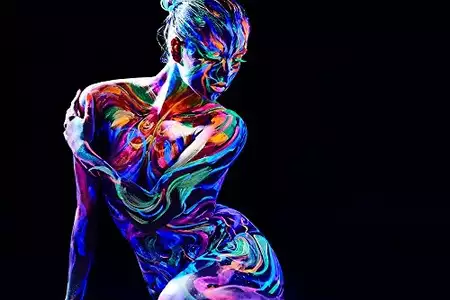
- UV body painting
- Special effects
- Airbrush
- Body painting competition
- Paintloon
- Action painting
- Body painting shows and performances
Hire BodyPainting for Private Events
Our highly talented bodypainting artist will boost your event with the element of surprise, creating incredible live art in a unique and unforgettable performance, transforming bodies into beautiful living canvases.
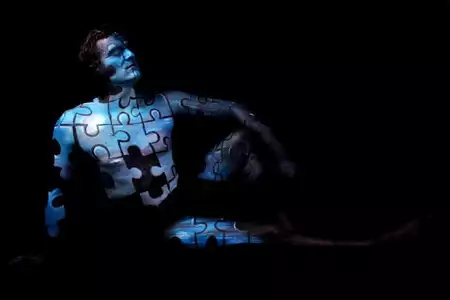
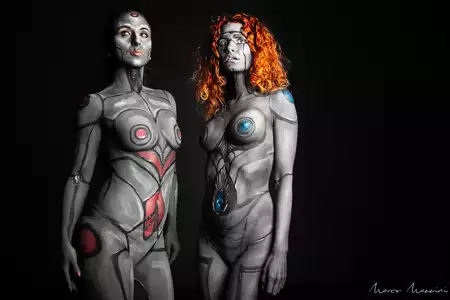
A professional artist with great experience, our exceptional act will invite your event's guests to enter a dream world full of colours, shapes, movement, poetry and emotion while demonstrating his impressive body painting skills. The models will become exquisite works of art right before your eyes as our live event artist paints them as superheroes, mythical creatures, circus performers, flowers, animals, statues and more:
the possibilities are endless, with your imagination the only limit!
Inviting the audience to witness the impressive creation of a living art installation, our body artist offers unique event entertainment that promises to leave a lasting impression. Ideal for private parties, nightclubs, themed events and advertising campaigns, live body painting is also perfect corporate entertainment at exhibitions, product launches, ceremonies and more.
Suggestions:
Our body painter can also offer personalised workshops that teach the art form.
Get in touch with our specialists in shows and games for events to find out more.
Is Body Paint Art Lowbrow?
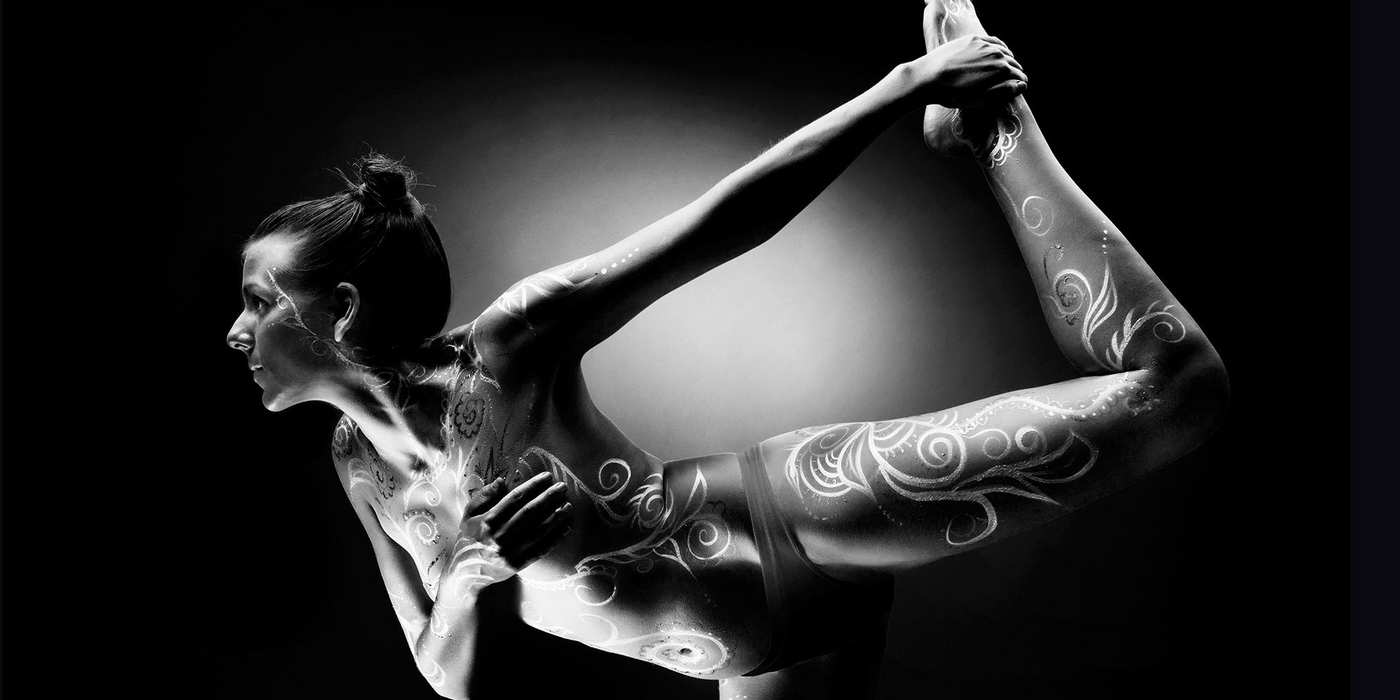
Many art critics dispute body painting as a legitimate method of contemporary art. As these are "temporary artworks", what is the value of body painting? What is the difference between lowbrow practices and body art painting? Is body painting just a temporary intervention that could be labelled a performance or conceptual art intervention? In general, most art critics believe that body painting is uncommon and therefore cannot be considered an artistic movement. These critics also argue that the art of body painting is carried out by non-professional artists and that it should be understood as tattoo art, cartoon art or nude art. However, the practice of body painting is more complex and has a fairly rich history; therefore, it cannot simply be dismissed as an illegitimate contemporary art practice.
Body Painting Art as a Contemporary Art Practice
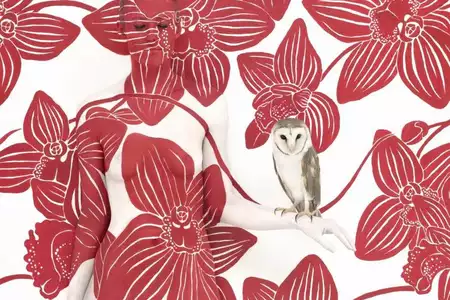
Art critics who dismiss body painting as a form of contemporary art are confronted with a number of surprising body painting practices that are very popular among art lovers. For example, so-called Mehndi or henna is a contemporary practice widely used in India, where this practice of artistic intervention transcends simple tattooing. In addition, in recent years there have been several contemporary artists who have used their own bodies as a canvas or used other human bodies as canvases. Two contemporary artists focus particularly on the art of body painting: the Chinese artist Liu Bolin and the Australian Emma Hack. As part of his own political and socially engaged art, Liu Bolin uses his own body in the practice of painting himself into various settings in Beijing, thus responding emotionally to the demolition of many areas of the Chinese capital. On the other hand, Emma Hack paints women on wallpaper, turning their naked bodies into exquisite murals. The practice of these two artists poses a serious challenge to the status of body painting within contemporary art. But it is important to say that the practice of these two artists is most often described as camouflaging the human body through body painting.
Where and how to position the art of body painting?
It is very difficult to answer the question of how to position the art of body painting. On the one hand, there are art critics and experts who are very cautious, and generally dismiss body painting as a contemporary art movement. They argue that the skin of the body simply cannot be a substitute for canvas. Furthermore, they link body painting with tattooing practices, which, in their opinion, cannot be considered art at all. On the other hand, there are critics and experts who compare the art of body painting with performance art. Many famous artists whose practice can be described as body painting (for example, Bolin and Hack) sell their works at auction, at quite high prices too. Therefore, they are contemporary artists. In addition, there are many body painting festivals that bring together art lovers, but also collectors. Finally, it only depends on the quality of the artworks in the end. If the practice of body painting is related to nail art or non-professional body drawing, then it cannot be considered contemporary art. It is only a matter of quality, aesthetics and conceptuality: when a body painting practice respects these "established norms", there is no need to dismiss it as an important part of contemporary art.