Japanese Taiko Drum Show for events

Consulta el presupuesto con precio Japanese Taiko Drum Show for events en Barcelona y toda España
Features
Time
Approximately 10-15 minutes
Technical Requirements
Space for the artists depending on the number of drummers you want to hire.
Summary
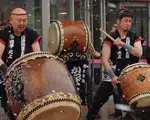
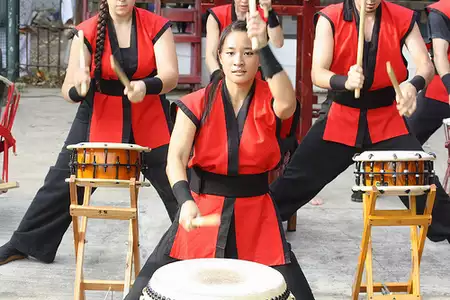
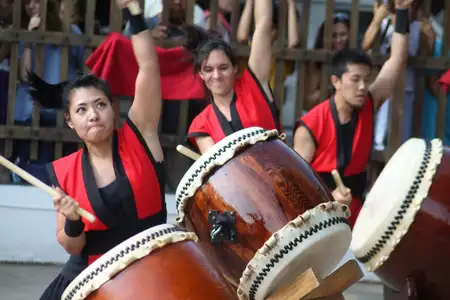
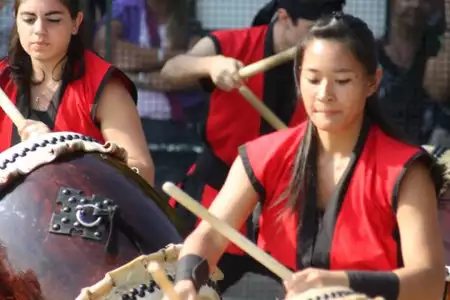
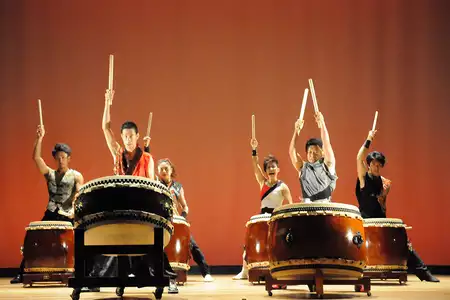
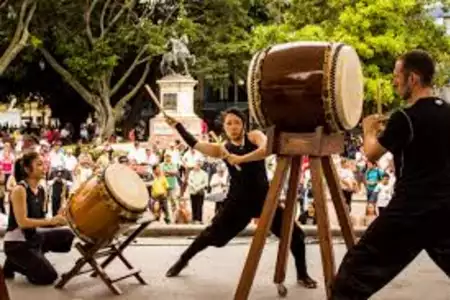
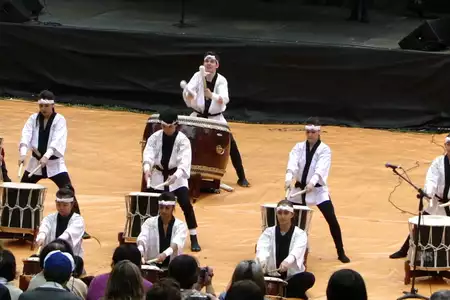
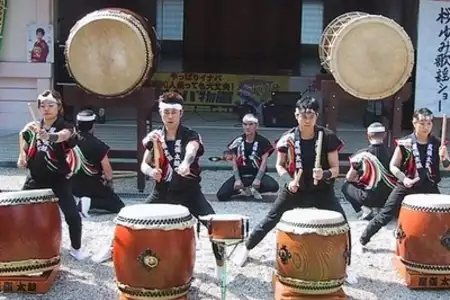
Drummers with different types of Japanese Taiko drums, which have a great impact on the event and are faithful to Japanese technique.
Different types of drummers can be hired.
Possibility of running a workshop for the guests.

What are Japanese Taiko drums for events?
Taiko (太鼓?) encompasses a variety of Japanese percussion instruments. In Japan, the term refers to any type of drum, but outside Japan, the term is generally used to refer to any of several Japanese drums called wadaiko (和太鼓?) and to the style of performance called kumi-daiko (組太鼓? lit. "collection of drums"). The process of building taiko varies between makers, but most includes preparing and setting the strength of the drum body, choosing a surface for the drum skin and carefully stretching the surface over the drum to create an appropriate tension.
Taiko has a mythological origin in Japanese folklore and appears to be a drum style of Japanese origin. Historical writings document that young Japanese men were sent to Korea to study the kakko, similar to taiko in some respects. Taiko is thought to have been introduced to Japan through Korean and Chinese cultural influence between 300-900 AD. Some taiko drums are similar to those found in India, Thailand, Vietnam and other cultures, which suggests that Southeast Asian influences existed. Archaeological evidence suggests that taiko existed in Japan as early as the Kofun period. Its function has varied throughout history, serving roles in communication, military action, theatrical accompaniment, religious ceremony and festival performances. In contemporary times, taiko drums have been the basis of certain social movements of minorities both inside and outside Japan.
The kumi-daiko tradition in Japan, characterised by an ensemble performance with different drums, can be dated to 1951 through the work of Daihachi Oguchi and continued with groups recognised worldwide such as Kodo. Other performance styles have also emerged from specific communities in Japan. Active kumi-daiko performance groups exist not only in Japan, but also in the United States, Australia, Canada and Brazil.
Taiko performances consist of many components, such as technical rhythm, form, grip of the drumstick, clothing and instrumentation. Groups generally use different types of barrel-shaped nagadō-daiko (長胴太鼓?) as well as smaller shime-daiko (締め太鼓?). In addition to drums, many groups use voices and string or wind instruments as accompaniment.